ՀԱՅ
ՀԱՅ РУС
РУС
Qatar 5 Days
1152 USD
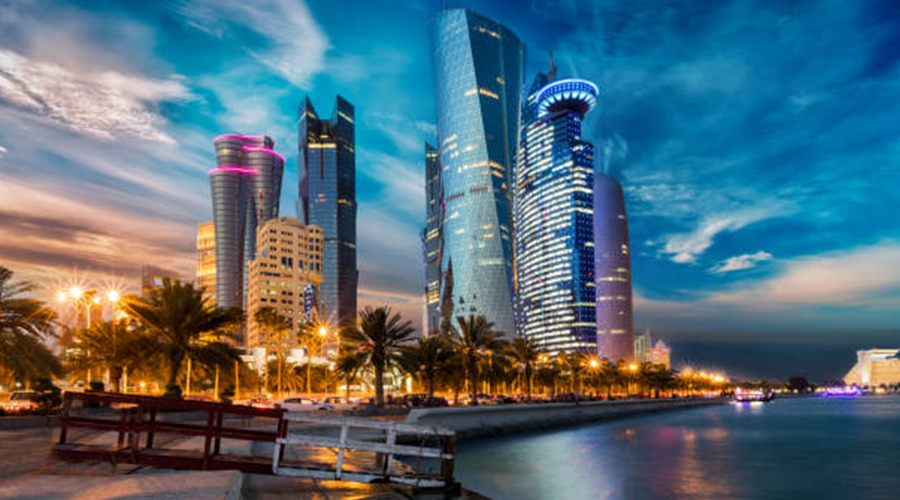
Qatar, once one of the poorest countries in the Persian Gulf, is today considered one of the richest countries in the region. The State of Qatar is a sovereign and independent state in the Middle East, stretching toward the Arabian Gulf. After gaining independence from Britain in 1971, Qatar became one of the world's largest producers of oil and gas.
Few records survive about Qatar's early history. Its semi-nomadic Bedouin population has cherished traditions such as falconry and camel racing. In the mid-19th century, when the Al Thani family came to power, the foundation of the modern country was laid. Qatar's government is an absolute monarchy ruled by the Al Thani family. Political parties are banned, and Qatar has no independent legislature.
Qatar is a peninsula stretching from the Persian Gulf to Saudi Arabia. Its total area is only 11,586 sq. km. Most of Qatar is a low-lying and desert plain. In the winter months, Qatar's climate is mild and pleasant, while in summer it is very hot and dry.
Qatar is a traditional country where social changes are happening very rapidly. It is important for Qatar to preserve its cultural heritage. Foreign visitors are expected to dress in a style consistent with Islamic culture. Conservative clothing is recommended. Men typically wear long trousers and a shirt in public. In public places, women's clothing should cover the shoulders and knees. When Arab men meet, they usually greet each other with a handshake. Men usually do not greet a woman with a handshake. Women in Qatar have certain freedoms. Women can drive, travel alone, receive an education, and work — freedoms that are restricted for women in some neighboring Arab countries.
Throughout the year, there are many Qatari holidays and events. Some of them are religious in nature. Among the largest festivals are Eid, which is perhaps the most famous religious event of the year, and the Tribeca Film Festival, which attracts thousands of foreign visitors every year.
Every month, a cultural festival is held in Qatar's capital. This important festival, which attracts thousands of visitors annually, showcases the cultural uniqueness of the region. The event mainly features traditional music, dance, costumes, and cuisine.
Qatari cuisine includes traditional, Arab, and Iranian cuisines. Indian cuisine also has a major influence. Pork is forbidden in Qatar. The consumption and sale of alcohol are strictly controlled. Qatar's national dish is called machboos. It is a dish consisting of rice, vegetables, and meat. Some traditional desserts include rice and bread pudding, mehkhhabiya, and sago.
Qatar is a country with a dry, hot, and subtropical desert climate, with very hot summers and little annual rainfall. To avoid these climatic limitations, spring and autumn are the best times to visit Qatar, when the temperature is warm and the evenings can be pleasantly cool. The best period to visit Qatar is from November to April. Such climatic conditions allow visiting attractions throughout the country.
Tourists cannot wear swimsuits or bikinis on public beaches. Most Qatari women wear shorts and T-shirts when going to the sea, and a bikini at a hotel or resort. Visitors are offered food and drinks, as well as resorts. However, they usually have separate guest areas where they receive visitors. Such areas are separated from regularly used family spaces. Members of the opposite sex usually do not greet each other. The elderly are highly respected and politely greet the younger generation.
Qatar has rich beauty and culture to offer tourists. Among the most famous tourist attractions is the Qatar Mosque, located in the center of the Cultural Village of Qatar, and the Doha Desert. The Al Wakrah Museum displays Qatar's finest architectural examples. The exhibits in the museum are quite fascinating and present details of Qatar's history.